

Kathmandu: Hiking has become the first choice for those looking to refresh their mind and body from the city’s chaos, dust, and relentless rush. In the valley, it’s increasingly popular to go hiking with friends, chatting and enjoying nature. Spending a few hours in the lap of nature not only relaxes the mind but also boosts energy and productivity when returning to daily life.
Today, we explore some hidden hiking destinations near Kathmandu Valley, where you can experience nature, scenic views, and a touch of adventure all at once.
1. Tarebhir

Located in the northern part of Kathmandu, Tarebhir is part of Shivapuri National Park. True to its name, the cliff at Tarebhir makes it a famous spot. It’s an ideal destination for those who want to enjoy natural beauty and panoramic views of the valley.
From here, you can see two contrasting faces of Kathmandu: one, the dense urban city, and the other, scenic rural areas busy with agriculture. The easiest and shortest route to Tarebhir starts from Nijamati Shaheed Memorial Park in Gokarna, taking about 1.5 to 2 hours on foot. For longer treks, visitors can also reach Tarebhir via Shivapuri or from Budhanilkantha’s Deuvachok.
The main attractions of Tarebhir include stunning views of Kathmandu Valley and Tribhuvan Airport, surrounding hills and mountains, and the local Tamang community with cultural experiences. Along the way, the chirping of birds in pine groves makes the hike even more memorable.
2. Suryagadhi

Suryagadhi, located in Nuwakot district northwest of Kathmandu, is a scenic hiking spot. Its peaceful environment and panoramic views make it a favorite among nature lovers.
From Suryagadhi, hikers can enjoy mesmerizing Himalayan views, the gurgling Falakhu River, and lush green meadows surrounding the area. Stone walls tell stories of valor, while the gentle breeze brings a sense of calm.
It’s about 35 km from Kathmandu, taking 2–3 hours by car. From the drop-off point, a 30–40 minute walk leads to the summit. The trail is easy and short, suitable for families, friends, or solo hikers.
Suryagadhi also holds historical and religious significance. From the time of King Prithvi Narayan Shah to the Nepal-China-Tibet war, it carries stories of valor and sacrifice from our ancestors.
3. Bosan Danda

Bosan Danda, also known as White House, is located in Dakshinkali Municipality at 1,600 meters above sea level. It’s an ideal destination for short trips, sightseeing, and trekking.
Visitors usually take a bus from the old bus park to Taudaha, followed by an off-road drive to Bosan Danda. From Taudaha, the hike to the summit typically takes around three hours on foot.
According to legend, when Manjushri cleared the waters of Kathmandu Valley with his sword, the Karkotak Nāga flowed out. To control it, Taudaha Lake was created, and the soil from digging the lake formed Bosan Danda.
From the summit, hikers can enjoy panoramic views of Kathmandu Valley, the Himalayan range, Chobar Monastery, Taudaha Lake, and Sikali fields.
4. Champadevi Hiking
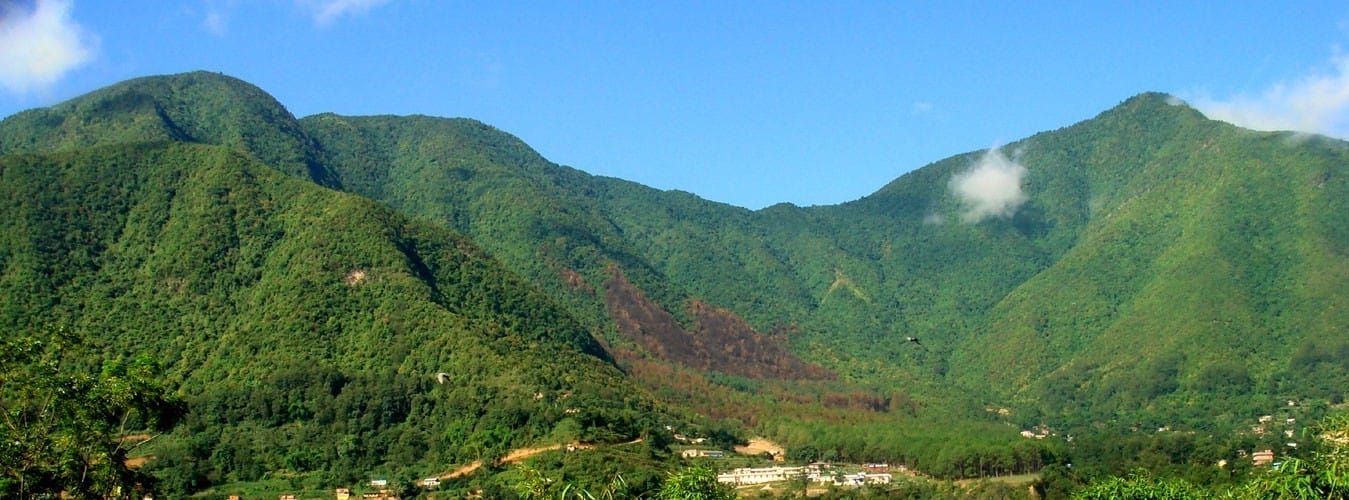
Champadevi Hill, located in the southwestern part of the valley, marks the boundary between Kathmandu and Makwanpur. Surrounded by dense forest, it’s perfect for those who want to immerse themselves in nature.
One common route starts from Taudaha, passes through Dakshinkali Temple, and continues past old Newar settlements. Other paths are also available, including routes via public transport from Bhanjyang to Hattiban Resort. From there, it takes about three hours to reach the summit through lush forests.
Another route starts from Machhegaon in Kirtipur, which takes around five hours to reach Champadevi. From the summit, hikers can enjoy views of Himalayan peaks including Gaurishankar, Langtang, and Annapurna. Along the hike, birds’ chirping is common, and occasionally, wild animals can be spotted.
According to legend, when Manjushri visited Swayambhu, he brought two wives along: Keshani (Lakshmi) and Upkeshani (Saraswati). During the flooding of Kathmandu, he placed them on high hills—Keshani on Phulchowki (2,800 m) and Upkeshani on Champadevi (2,300 m). It’s said that since then, the goddess resides on the hill.
The name Champadevi also comes from the abundance of “Champaka” flowers. In Newar language, it’s called “Dhincho.” The hill also houses a Buddhist stupa, and fluttering prayer flags add a sacred charm to the place.
5. Bethanchok

Bethanchok Narayansthan, in Bethanchok Rural Municipality–3, Kavrepalanchok, is famous for religious tourism and trekking. At 3,018 meters above sea level, it’s the highest peak in Kavre and the fourth highest in the Mahabharat range.
Legend says that during the Malla period in Bhaktapur, the king faced a crisis. When he invoked Lord Narayan, the deity instructed him to visit the highest southern peak. The king found Narayan residing there, and the site became known as Bethanchok Narayansthan.
To reach the site, it’s 25 km from Dhulikhel and 55 km from Kathmandu. From Dhunkhark Bazaar, vehicles can reach Deurali Chaur (7 km), followed by a 45-minute walk (2 km) to the temple.
From here, hikers can enjoy panoramic views of Himalayan peaks including Everest, Nupse, Makalu, Lhotse Dorje, Sisapangma, Jugal, Ganesh, Manaslu, Gorkha, Machapuchhre, Annapurna, Dhaulagiri, Langtang, and Gaurishankar. The site is suitable for sunrise and sunset visits, and in winter, the area is often snow-covered.


