

One of the world's oldest and most important religions is Hinduism. Despite its South Asian origins, historical migration, cultural exchange, and social structures have allowed its influence to spread throughout the world. Hinduism has a significant influence on social values, rituals, art, music, literature, and lifestyle in addition to serving as a guide for spiritual life. Hinduism is widely practiced outside of South Asia, despite the fact that many people only associate it with that region.
According to global demographics, the proportion of Hindus in some nations is remarkably high. The top five nations with the largest Hindu majority, according to population data, are:
Nepal
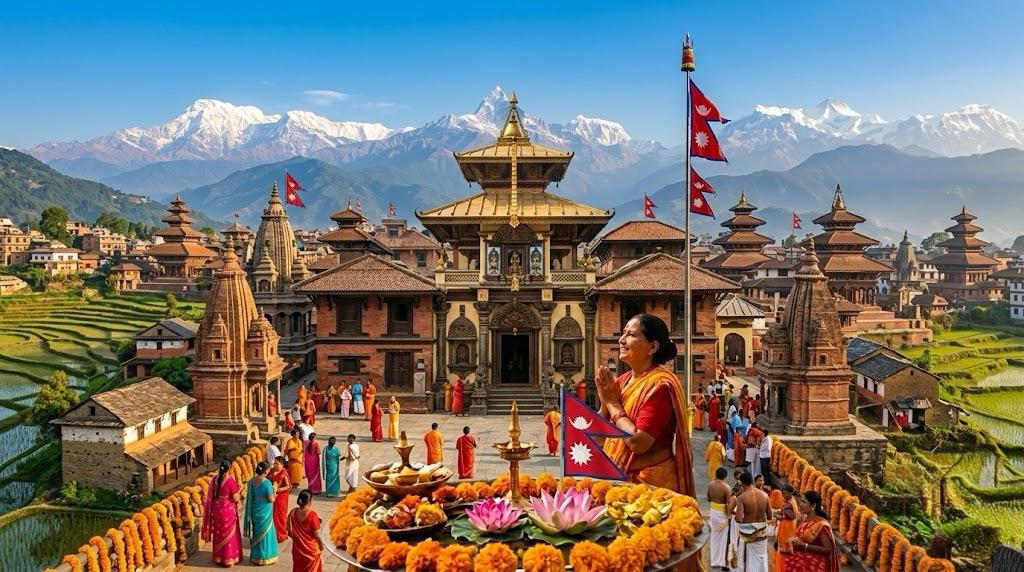
The nation with the largest Hindu majority in the world is acknowledged to be Nepal. About 81.19% of Nepal's population is Hindu, according to the country's 2021 census. Nepal was formally known as a "Hindu Kingdom" from the time of the state's unification in 1824 until 2006. Despite becoming a secular nation in 2006–2007, Hindu traditions continue to play a significant role in the country's cultural, social, and religious identity.
Nepal is an important historical center for Hindu culture. The Pashupatinath Temple and Muktinath Temple are important religious and cultural landmarks that are also important pilgrimage sites. Festivals and Vedic rituals have a big impact on how people in Nepal live. Dashain, Tihar, Maha Shivaratri, and Teej are more than just religious holidays; they also represent social cohesion, family unity, and the continuation of culture. Vedic rituals, such as naming ceremonies, sacred thread rites, weddings, and cremations, are still a big part of Nepali culture.
India
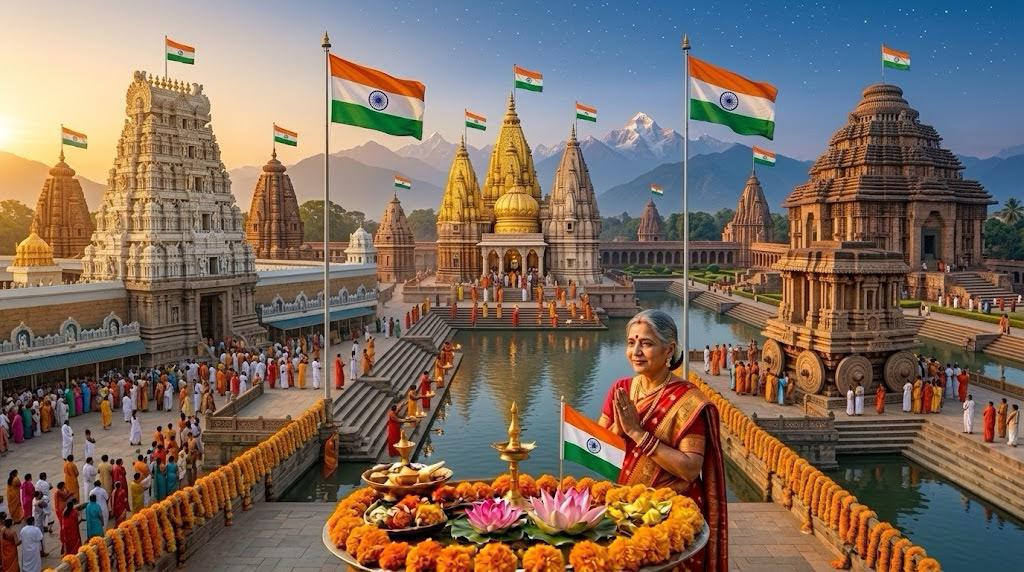
The largest Hindu population in the world resides in India, the country that gave rise to Hinduism. Hinduism is practiced by about 78.9% of India's population. In addition to directing religious life, sacred writings like the Vedas, Upanishads, Ramayana, and Mahabharata have enhanced Indian culture, philosophy, and civilization. International recognition is accorded to India's principal pilgrimage sites, such as Tirupati Balaji Temple, Kashi Vishwanath Temple, and Varanasi. Holidays like Diwali, Holi, Navratri, and Rath Yatra promote religious tolerance and social cohesion while leaving a lasting impression on Indian culture and way of life.
We Suggest : Why People Wear Watches on the Left Hand
Mauritius
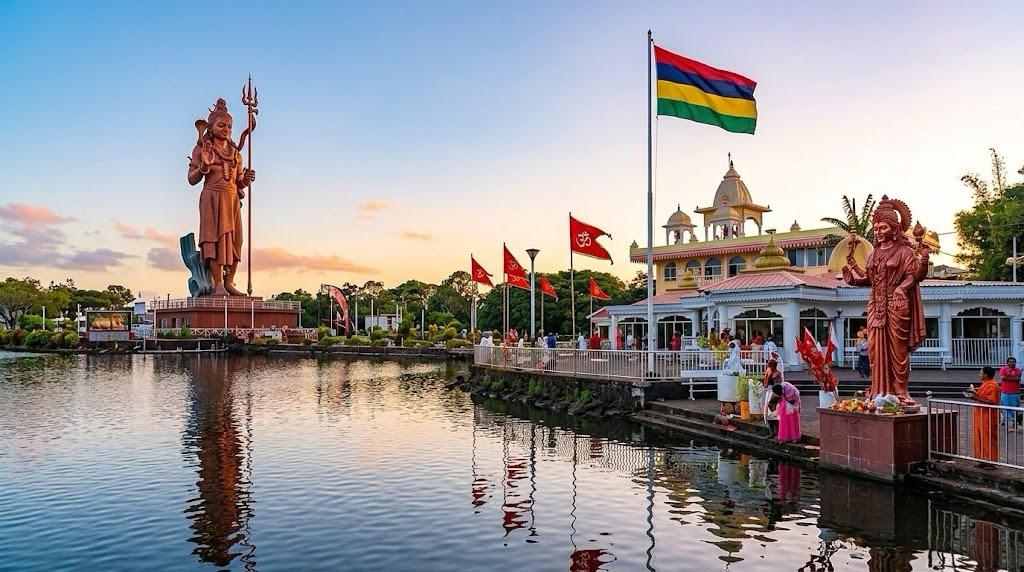
The small African island nation of Mauritius has a sizable Hindu population, second only to Nepal and India. Approximately 48.4% of its people are Hindus. This demonstrates how Hindu customs have spread throughout the world outside of South Asia. Indian laborers were employed on sugar plantations during the 19th century, which preserved and enhanced their cultural, linguistic, and religious customs. Popular pilgrimage locations include a variety of vibrant temples, such as the revered Grand Bassin (Ganga Talao). Major holidays like Diwali and Maha Shivaratri are joyfully and fervently observed.
Fiji
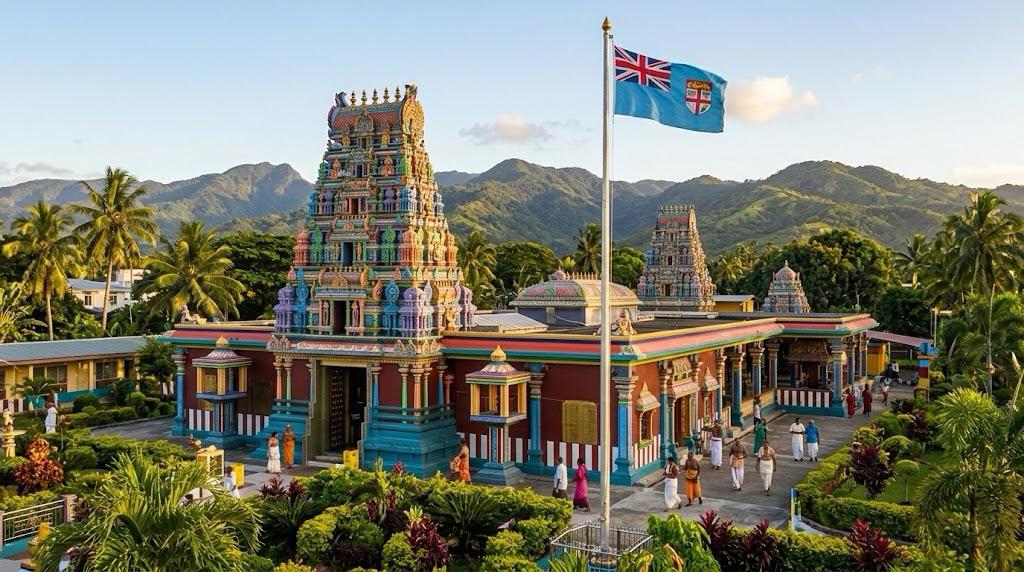
Hinduism is the second most popular religion in Fiji, a country in the South Pacific, where about 27.9% of the population is Hindu. Hinduism was introduced to Fiji by Indian immigrants during the British colonial era. To preserve their religious and cultural identity, the Indo-Fijian community has since built temples, educational institutions, and cultural centers. Among the most significant Hindu temples in Fiji is the Shri Shiva Subramanya Temple. Hindu holidays like Diwali, Holi, and others are observed nationwide, demonstrating religious harmony and cultural vitality. Hindu customs are still very much alive in Fiji, despite the country's distance from South Asia.
We Suggest : Does the evil Eye Amulet Really Block Negative Energy?
Guyana
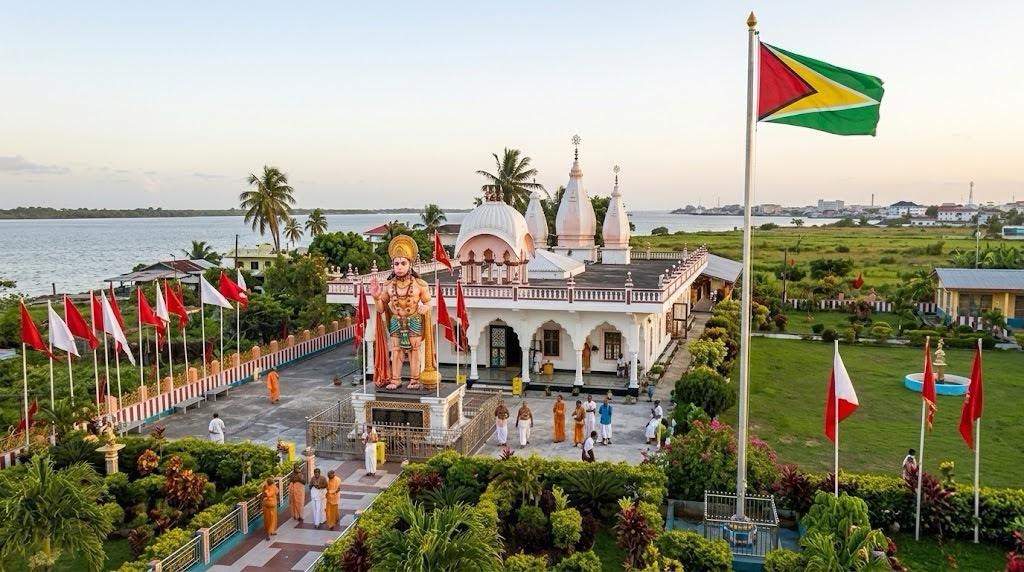
About 23.3% of people in Guyana are Hindu, which is the highest percentage in South America. When Indian immigrants arrived in the 19th century, Hinduism was introduced. To maintain religious rituals and cultural customs, the Indo-Guyanese community built temples such as the Dattatreya Ashram. Holidays like Holi and Diwali continue to improve social cohesiveness and community identity.
Conclusion
Hinduism's global reach is a reflection of its rich cultural heritage, migration, and historical depth. Hindu communities have maintained and honored their customs from India, the Himalayan country of Nepal, the islands of Mauritius and Fiji, and Guyana in South America. These five nations show that Hinduism is a global spiritual, cultural, and social force that has a profound effect on human values, societies, and cultures.


